AI-powered platform to streamline group life insurance pricing workflows for metlife
Role — Lead Designer
Company — Kyndryl
Client — Metlife
Duration — July - Dec 2025
Team — Insurance SMEs, Account Manager, 1 SWE, 1 Cloud Architect
Problem
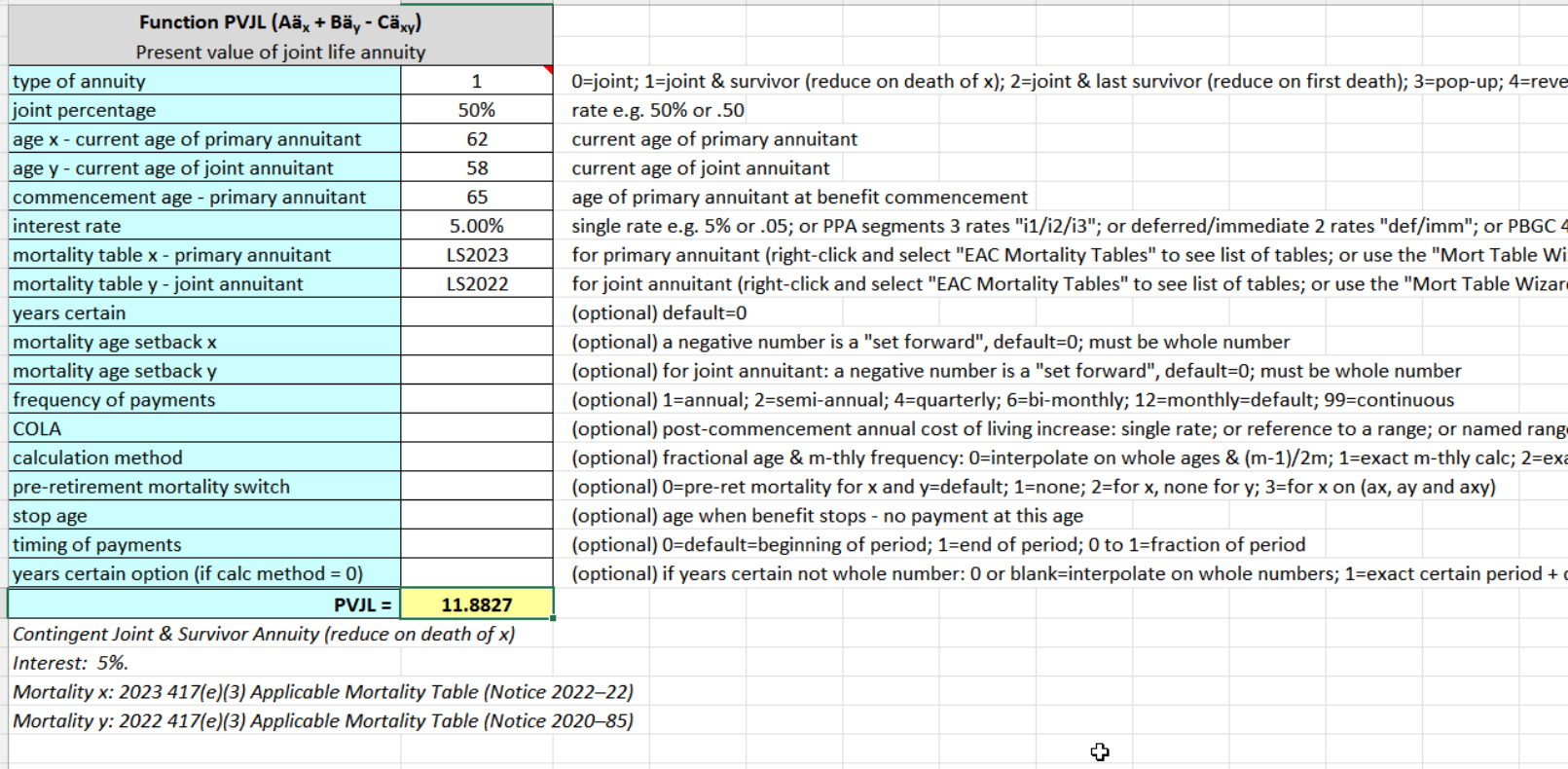
Group life actuaries were acting as human middleware, spending a significant share of their time cleaning data, re‑triaging queues, and searching for precedent instead of pricing risk. Critical cases sat in date‑sorted queues while urgent risks hid in plain sight, and past decisions were fragmented across tools, forcing teams to either duplicate analysis or price blind.
Strategy
I reframed the workflow around a set of specialized AI agents—intake, triage, precedent, and analytics—each responsible for a specific step actuaries were informally stitching together. The system handles normalization, prioritization, retrieval, and portfolio context, turning a fragmented process into an AI‑first workspace where actuaries only step in for the judgment calls.
Outcomes
60-70% reduction in manual data cleanup and formatting time.
3x faster quote turnaround for complex or high-risk cases.
70% fewer broker follow-ups and coordination loops.
The Process
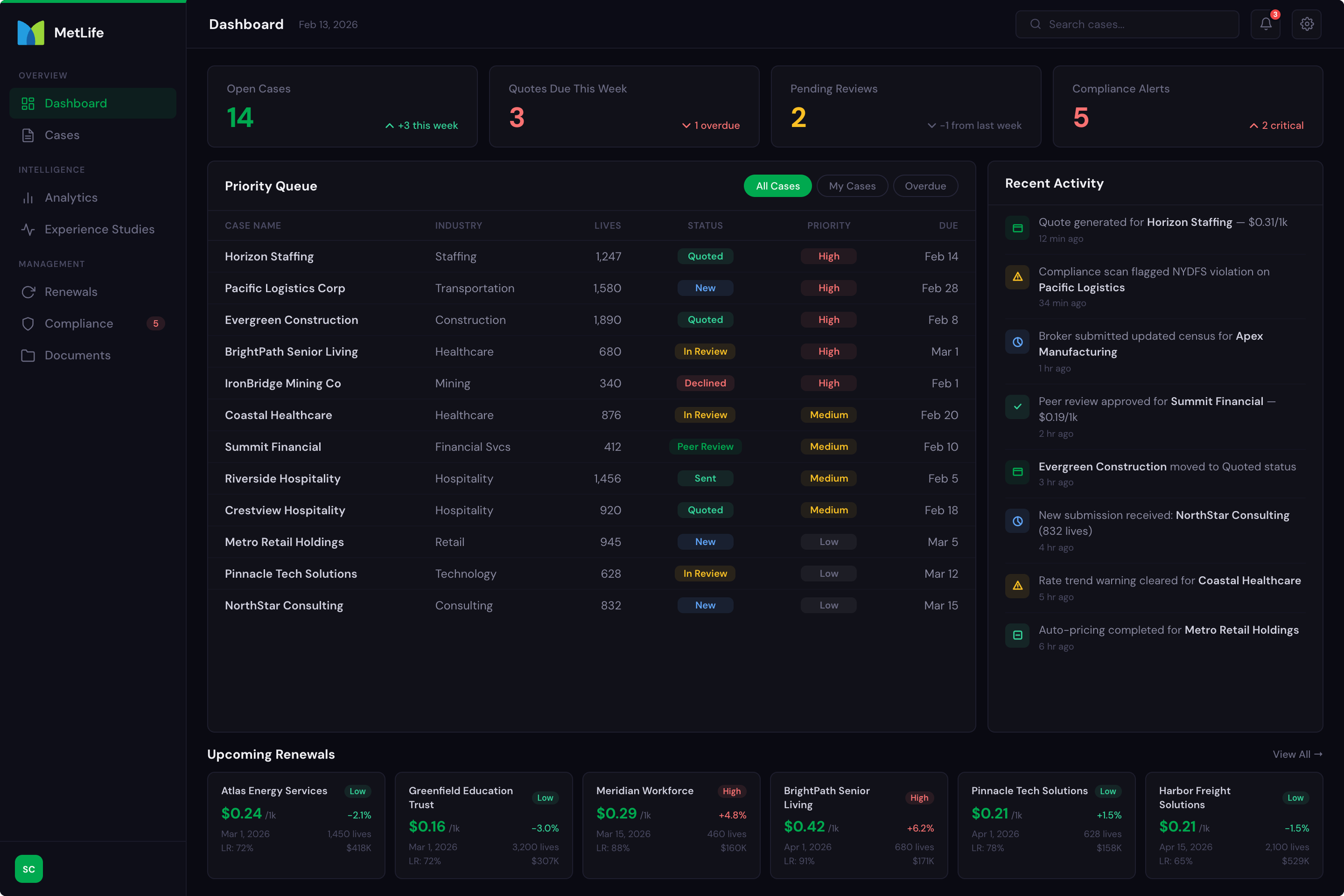
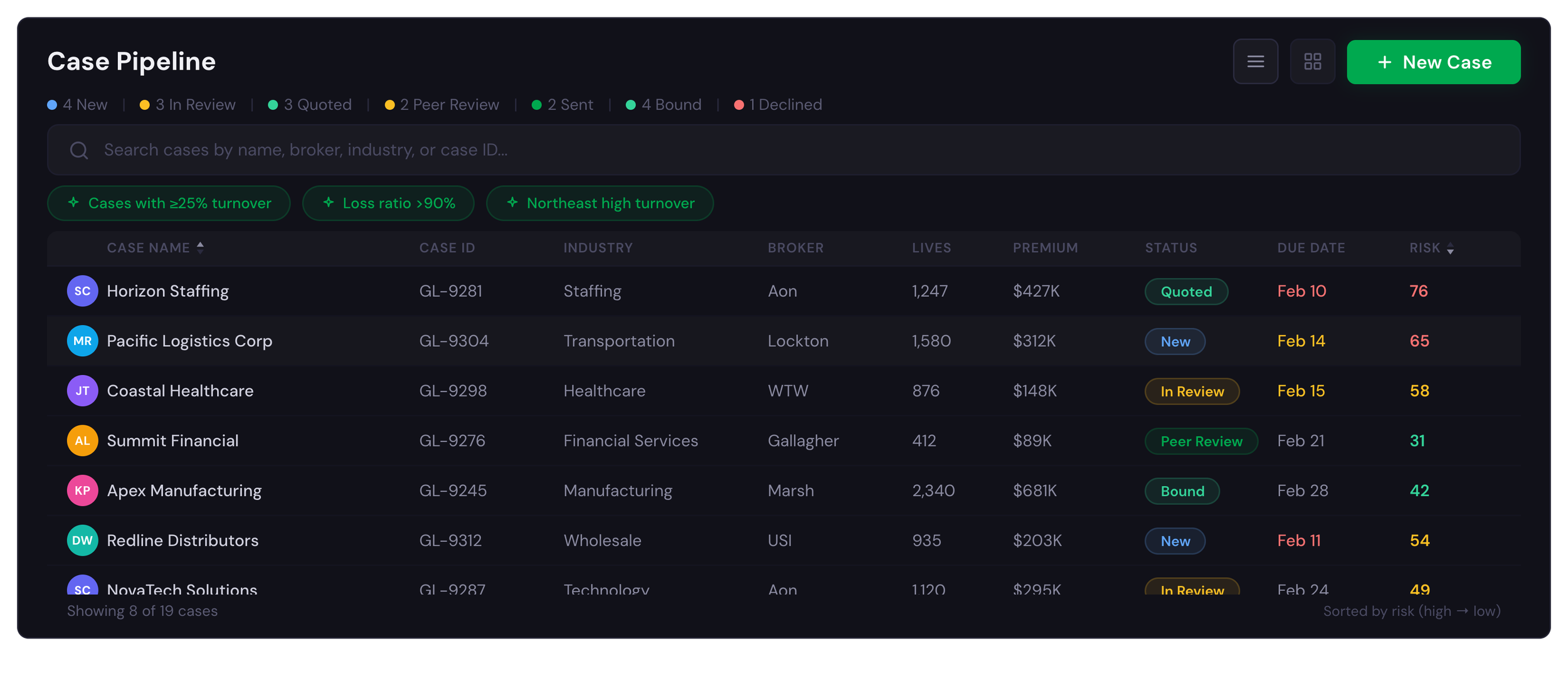
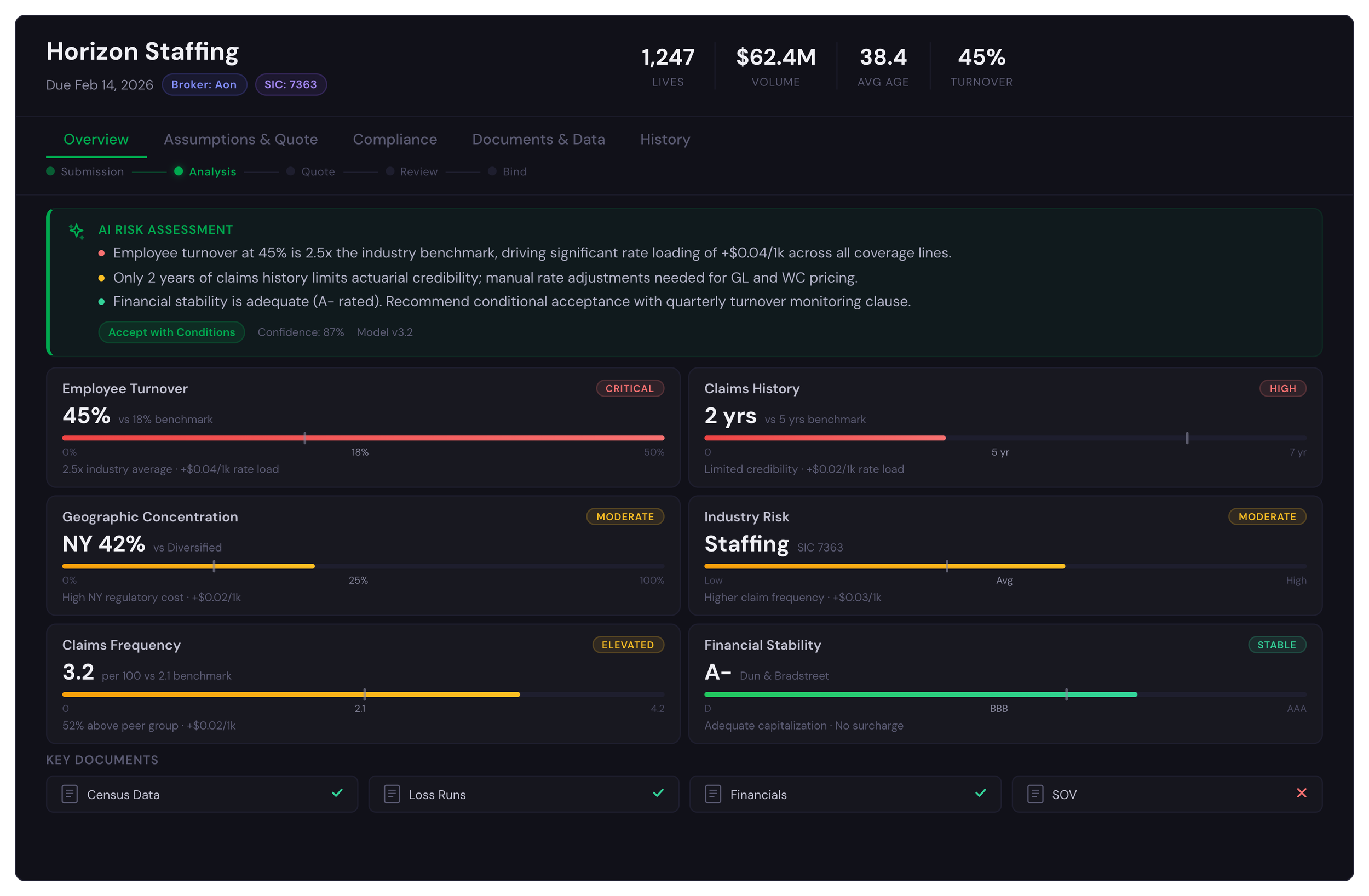
The original date‑based worklist forced actuaries to scan manually for red flags like high turnover, compliance concerns, or tight deadlines. I redesigned it around a triage agent that scores risk and urgency, pushes the most critical cases to the top with clear rationale, and lets actuaries override those calls to refine the model over time.
Risk needs to jump the queue
The original date‑based worklist forced actuaries to scan manually for red flags like high turnover, compliance concerns, or tight deadlines. I redesigned it around a triage agent that scores risk and urgency, pushes the most critical cases to the top with clear rationale, and lets actuaries override those calls to refine the model over time.
Assumptions need guardrails, not spreadsheets
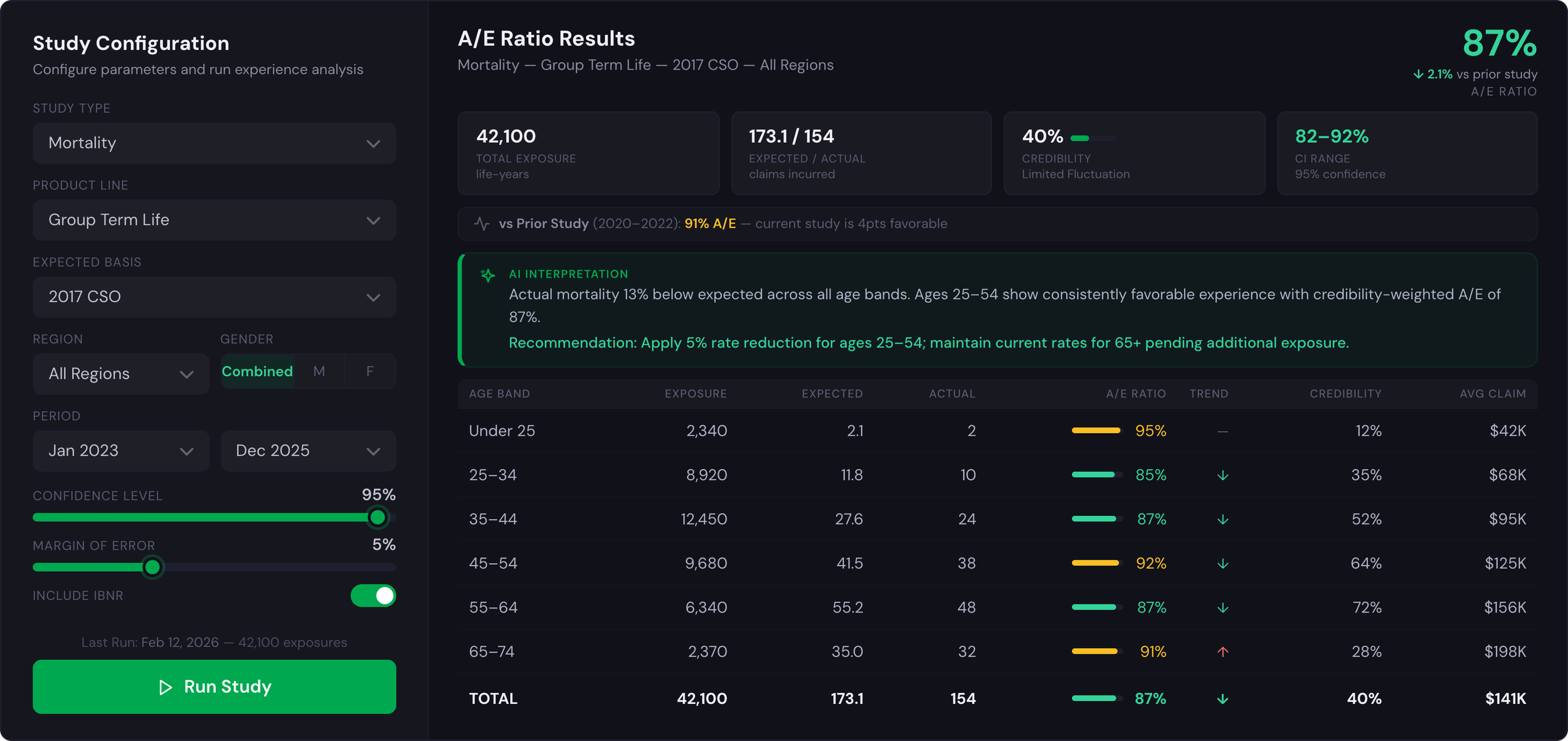
Junior actuaries struggled to know whether their assumptions were defensible and relied on scattered spreadsheets and late‑stage reviews. I introduced an experience‑studies agent that turns historical A/E patterns into inline guidance with credibility scores, flagging out‑of‑bounds inputs and suggesting grounded ranges in the moment.
Precedent shouldn't require archaeology
Similar past cases existed but were effectively buried in folders, email threads, and SharePoint. I designed a precedent agent that lets actuaries ask for “similar cases” from within any quote, then surfaces comparable deals, assumptions, and outcomes side by side so precedent becomes a starting point, not a research project.
Competitiveness requires context
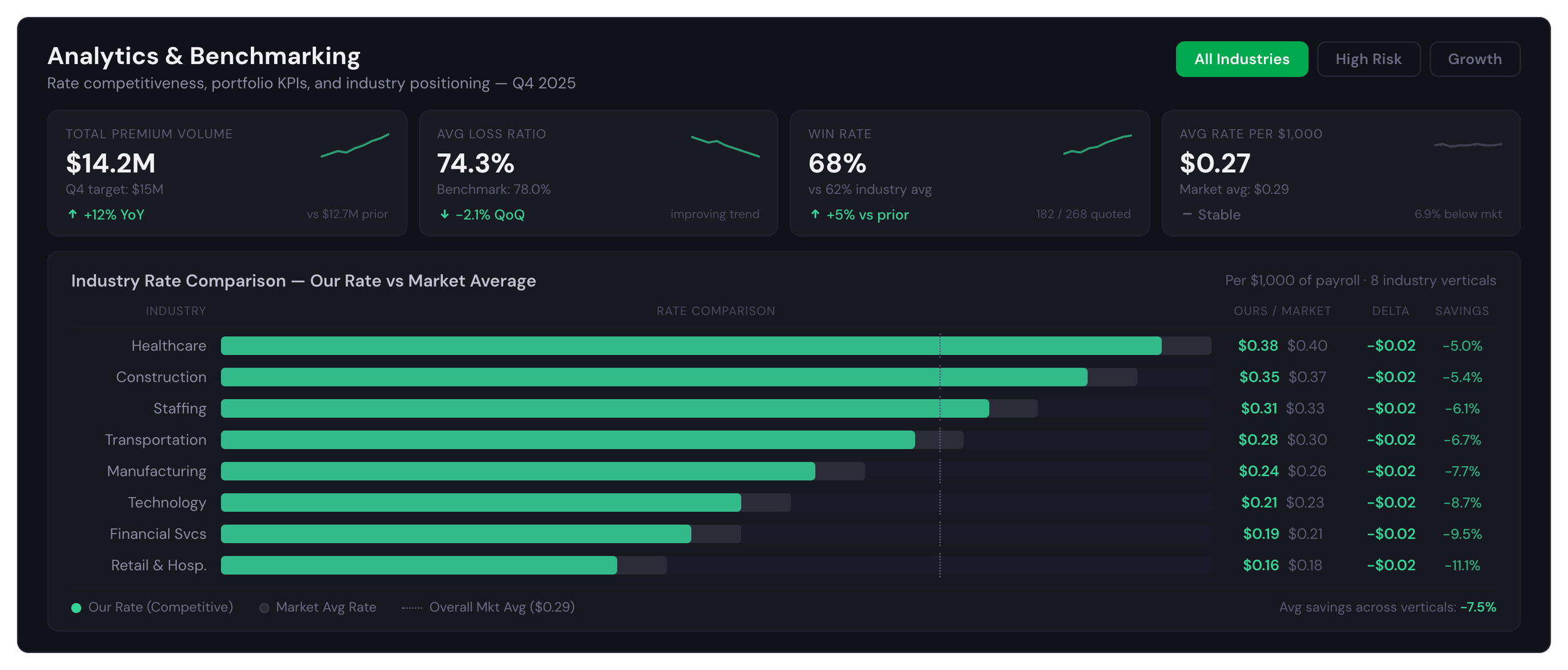
Actuaries were pricing in a vacuum, without a live sense of whether they were losing deals by overpricing or eroding margin by underpricing. A portfolio analytics agent now benchmarks win/loss and rate levels by segment and industry and feeds that context directly into case‑level decisions, so each quote is grounded in portfolio reality.
Conversation beats queries
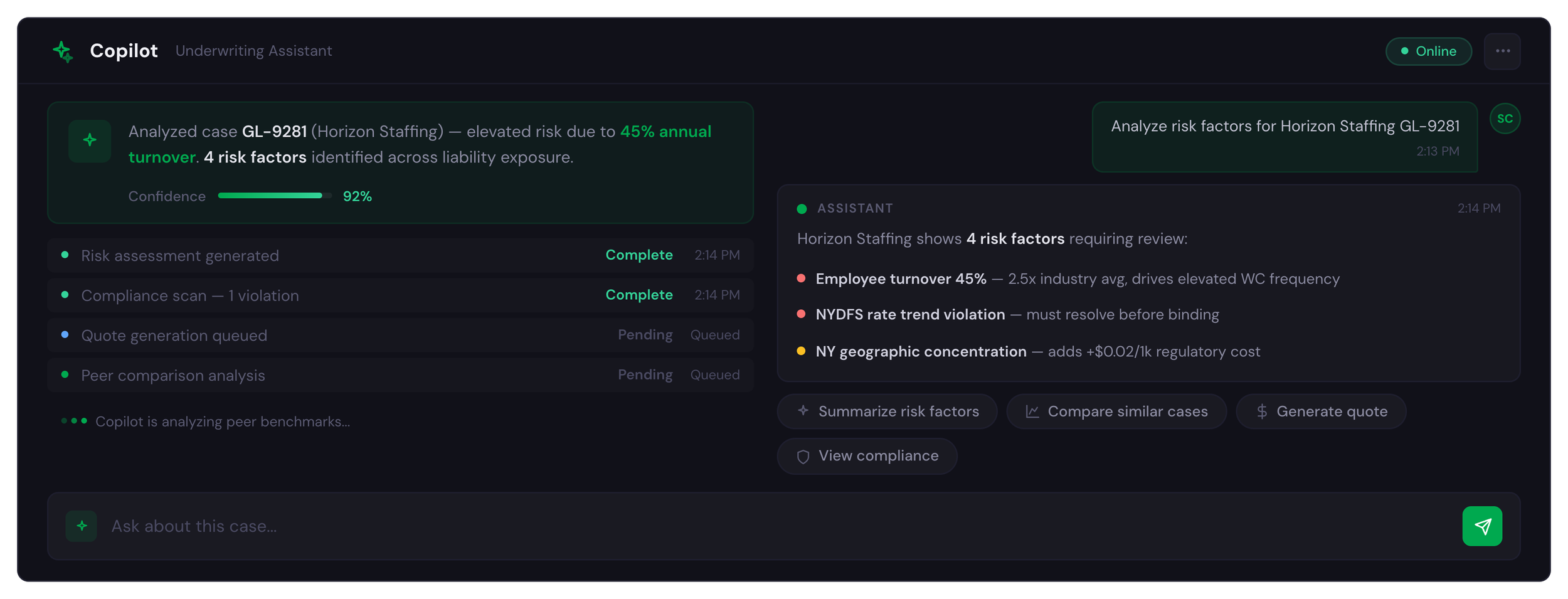
Dashboards and filters made it hard to interrogate insights from the agents, especially as patterns got more complex. I extended Copilot into a conversational layer over the agents, so actuaries can ask natural‑language questions about risks, trends, or segments and get stitched, contextual answers instead of hunting across multiple views.